Getting started · Granola
Connect Granola to ArcGlass
Connect a Granola workspace using a Personal API key and create a Calls and Meetings pipeline. About five minutes, start to finish.
Full walkthrough — connecting a meeting tool (Granola, Fireflies, Fathom) end to end.
Before you begin
What you'll need
ArcGlass access
An ArcGlass account with permission to create pipelines.
Granola access
Access to the Granola desktop application and workspace.
API access
Permission to create a Personal API key in Granola.
Security
A secure place to store the API key while onboarding.
At a glance
The three-step flow
01
Select Granola
Start a Calls and Meetings pipeline and choose Granola.
02
Create API key
Create and copy a Granola Personal API key.
03
Create pipeline
Paste the key, review defaults, and create the pipeline.
Step by step
The full walkthrough
01
Start a Granola pipeline
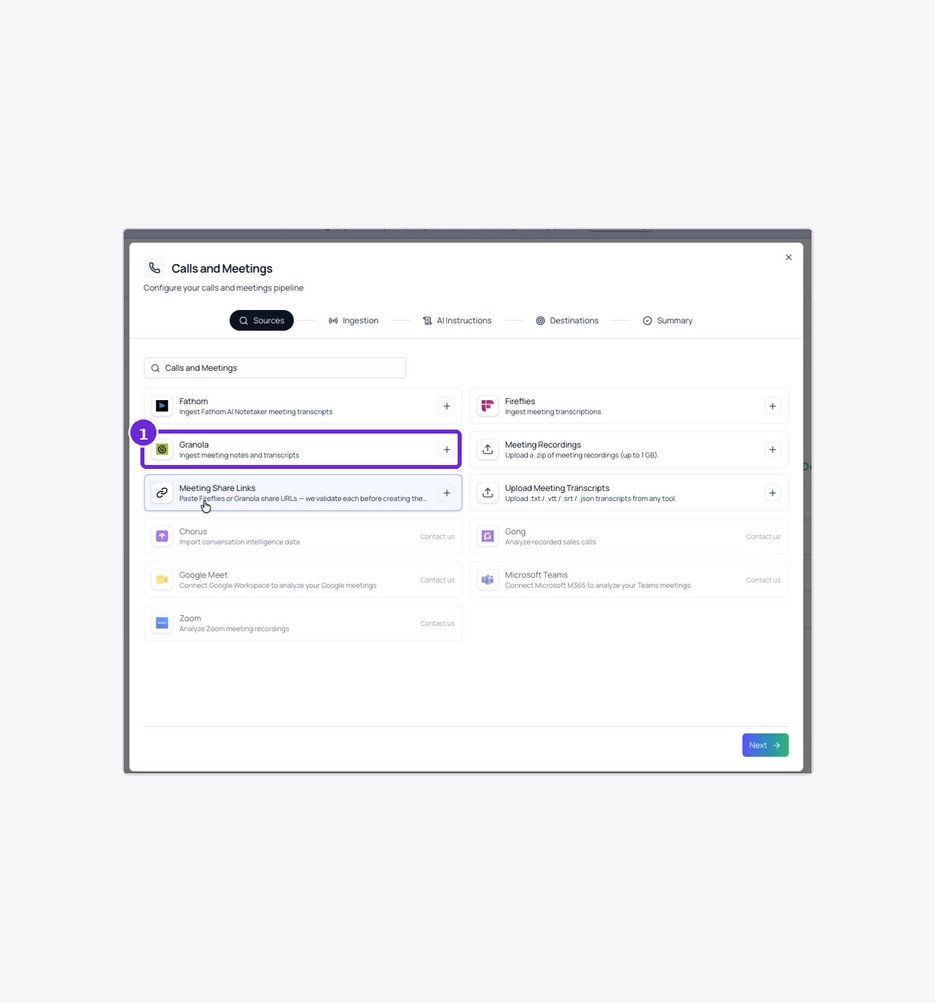
- Open Settings › Pipelines. Select Onboarding, then start a Calls and Meetings pipeline.
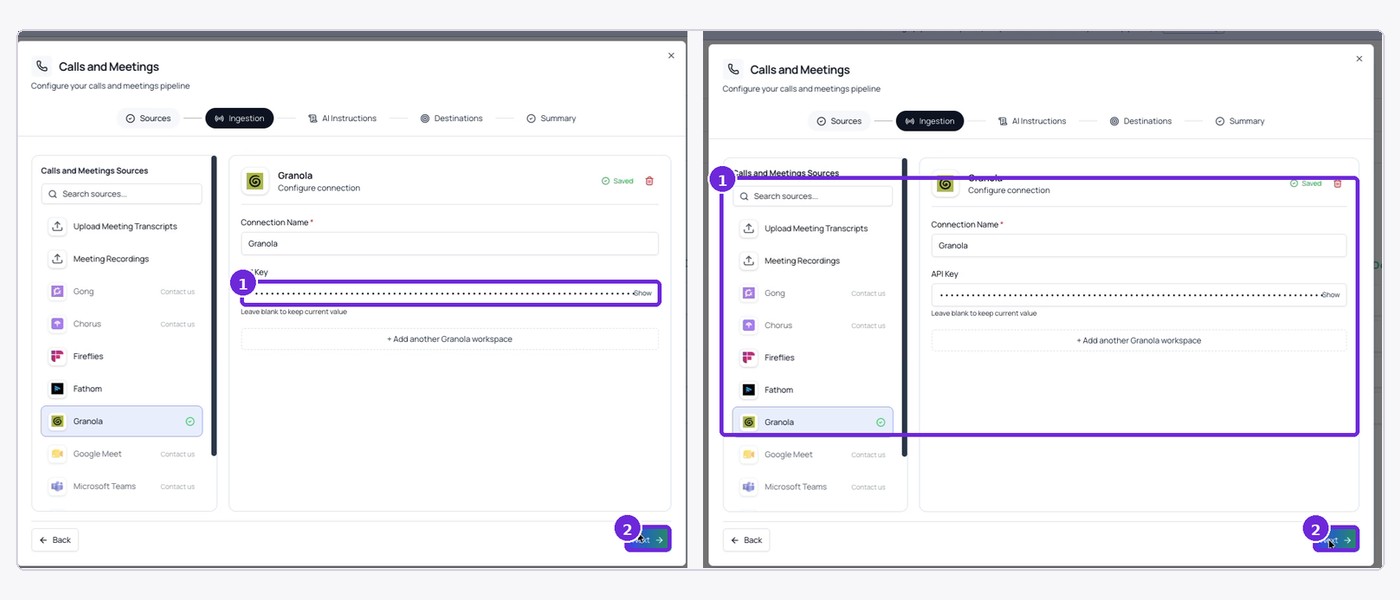
- Choose Granola. On the Sources page, select Granola from the available meeting sources.
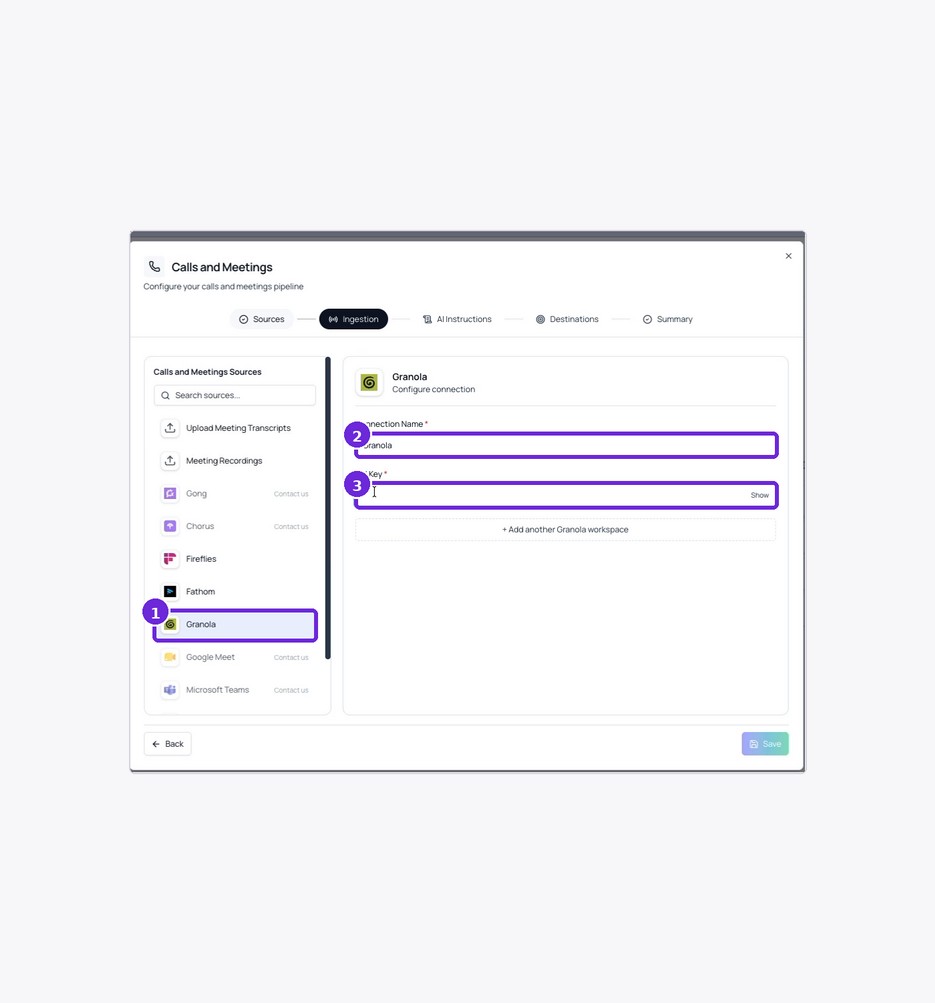
- Review the connection fields. Keep the Connection Name as Granola unless you need to distinguish multiple workspaces.
- Leave the API Key field open. You'll return after creating the key in Granola.
Tip — Copy the generated API key before closing the Granola dialog — it cannot be displayed again.
02
Create a Granola API key
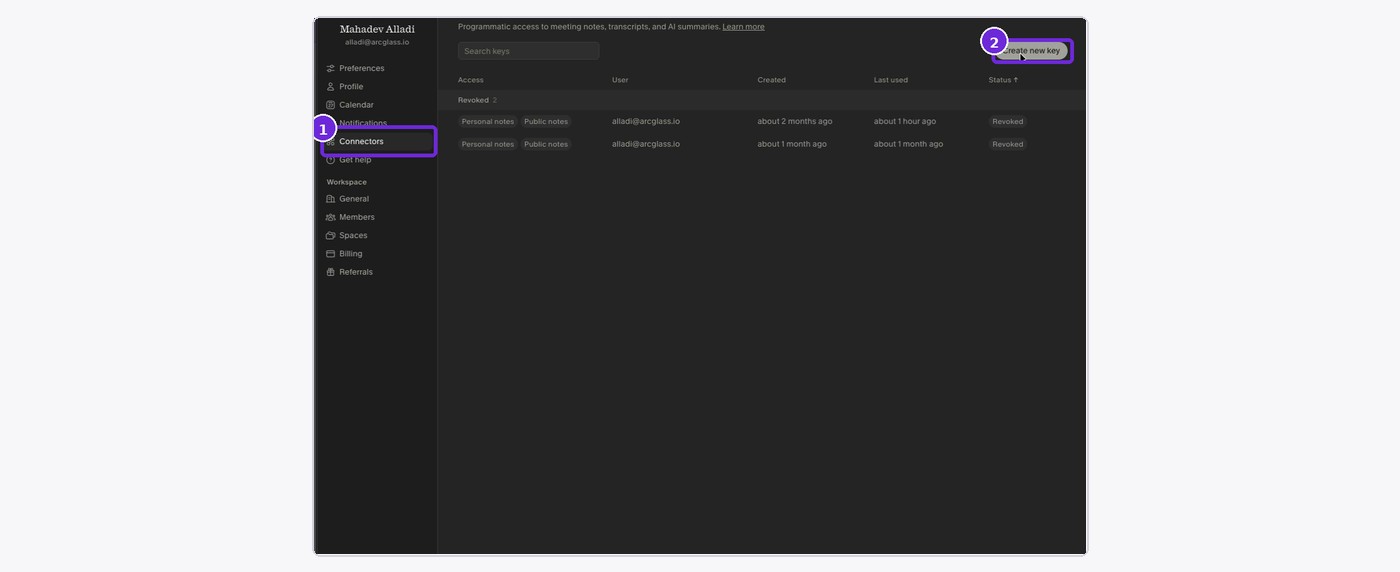
- Open Granola Preferences. In the Granola desktop application, open Preferences and select Connectors.
- Open Personal API keys. Select Create new key.
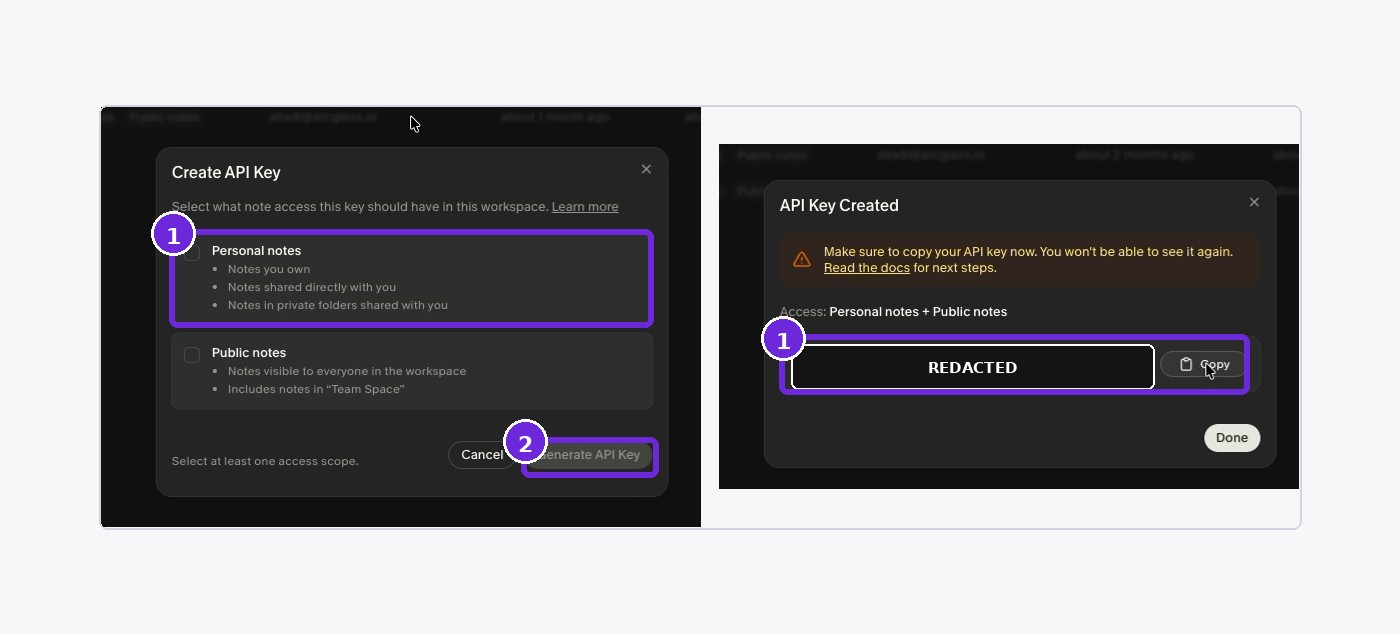
- Choose the note access. Enable Personal notes. Enable Public notes only if ArcGlass should process workspace-visible notes.
03
Connect Granola and create the pipeline
- Copy the key immediately. Granola displays a newly generated key only once. Store it securely during setup.
- Paste the key in ArcGlass. Return to the Granola integration, paste the API key, and select Save or Next.
- Keep the supplied defaults. Proceed through AI Instructions and Destinations unless ArcGlass provides different settings.
- Name and create the pipeline. Use a clear pipeline name, review the summary, and select Create Pipeline.

Confirm it worked
Confirm onboarding is complete
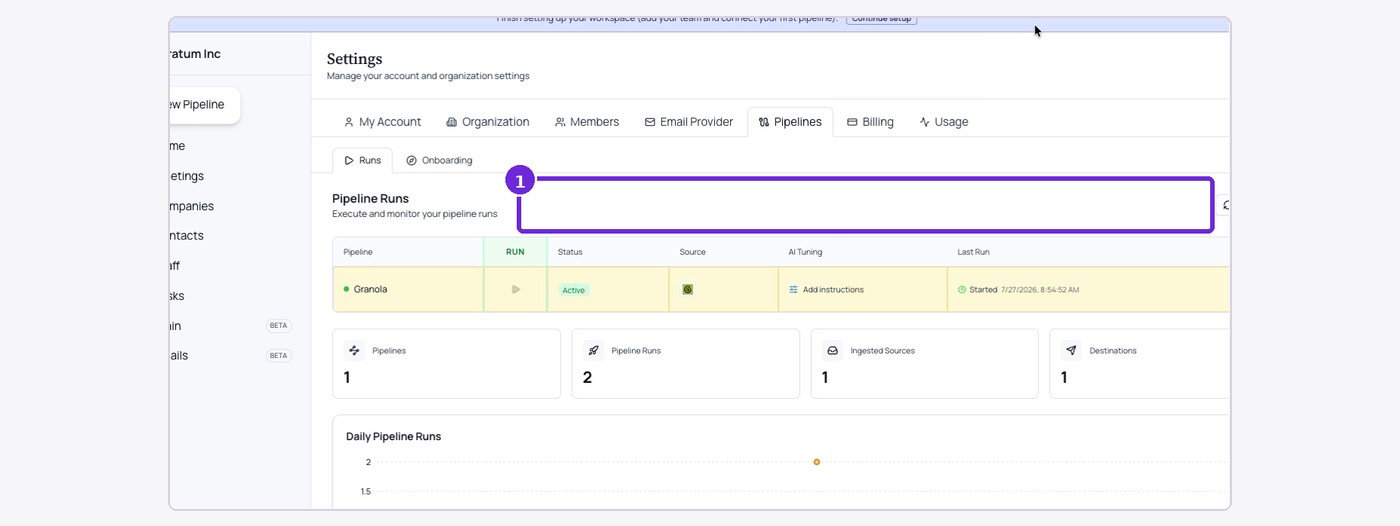
Open Pipeline Runs
The newly created Granola pipeline should appear in the list.
Verify status
The pipeline should show Active. ArcGlass will process new Granola meeting notes and transcripts as they become available.
You're done when
The Granola pipeline is Active and ArcGlass can authenticate to the selected Granola workspace.
If something's off
Quick troubleshooting
Granola source is unavailable
Confirm the Calls and Meetings pipeline type was selected.
Cannot create an API key
Confirm the Granola account has access to Personal API keys.
Connection is rejected
Create a new key, copy it without spaces, and paste it again.
No meetings appear
Confirm meetings and transcripts exist in the connected Granola workspace.